

All iLive content is medically reviewed or fact checked to ensure as much factual accuracy as possible.
We have strict sourcing guidelines and only link to reputable media sites, academic research institutions and, whenever possible, medically peer reviewed studies. Note that the numbers in parentheses ([1], [2], etc.) are clickable links to these studies.
If you feel that any of our content is inaccurate, out-of-date, or otherwise questionable, please select it and press Ctrl + Enter.
Colchicine for gout: how it works, when it helps, and what risks to consider
Medical expert of the article

Last updated: 23.03.2026
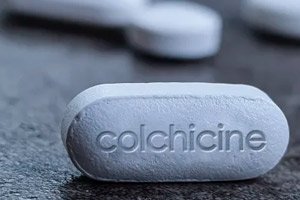
Colchicine remains a key anti-inflammatory drug for gout, but its role in therapy is much more clearly understood today than it was 10-20 years ago. Current guidelines do not consider it a universal "one-size-fits-all" treatment, but rather use it in two primary roles: for the treatment of acute attacks and for the prevention of exacerbations in the first months after initiating urate-lowering therapy. The American College of Rheumatology classifies colchicine, nonsteroidal anti-inflammatory drugs, and glucocorticosteroids as first-line treatments for gout attacks, while the UK's National Institute for Health and Clinical Excellence recommends the same classes of drugs, choosing between them based on comorbidities, drug interactions, and patient preferences. [1]
Colchicine itself does not lower uric acid levels or address the underlying cause of gout. Its purpose is different: to reduce the inflammation triggered by monosodium urate crystals in the joint. Therefore, colchicine does not replace allopurinol, febuxostat, or other urate-lowering medications, but rather complements a long-term treatment strategy. This is crucial, because the misconception that "the attack is over, so the disease is cured" remains one of the most common causes of recurrent flare-ups and chronic gout. [2]
Another important point is that modern practice has moved away from the old high-dose colchicine regimen. Both the American College of Rheumatology and the U.S. Food and Drug Administration's regulatory filings support the low-dose approach, as it provides comparable anti-inflammatory effects with a lower risk of severe diarrhea, vomiting, and other adverse events. This is one of those cases where "more" is not "better." [3]
For patients with gout, colchicine is most often particularly useful in two scenarios. The first is very early treatment of an attack, when pain and inflammation are just beginning to develop. The second is the first few months after starting urate-lowering therapy, when the dissolution of urate deposits can paradoxically trigger new attacks. It is during this transitional period that prophylactic colchicine helps many patients maintain long-term treatment and avoid quitting due to recurrent attacks. [4]
However, colchicine cannot be considered a "safe little thing." The drug has a narrow therapeutic range, severe toxic reactions and even fatal overdoses have been reported, and the risk increases sharply when combined with certain antibiotics, inhibitors of transport proteins and enzymes, and in the presence of impaired renal and hepatic function. Therefore, a quality article about colchicine should not be an advertisement for the drug, but an honest analysis of its benefits, limitations, and conditions for safe use. [5]
What role does colchicine actually play in the treatment of gout?
Gout isn't simply "elevated uric acid," but a crystalline inflammatory disease. When monosodium urate crystals are deposited in tissues, they activate the innate immune system, attract neutrophils, and trigger a vigorous inflammatory response. Colchicine is valuable precisely because it interferes with this inflammatory cascade, not because it affects uric acid synthesis. [6]
The American College of Rheumatology guidelines list colchicine as a first-line treatment for acute flare-ups, along with nonsteroidal anti-inflammatory drugs (NSAIDs) and glucocorticosteroids. This doesn't mean it's always the best option, but rather that it remains the standard and proven option if the individual patient has no contraindications and if the drug can be given early enough. The choice between the three classes depends on renal function, gastrointestinal risk, concomitant medications, the number of affected joints, and the individual's previous treatment history. [7]
Over the long term, the role of colchicine changes. It becomes less of a "gout cure forever" and more of a supportive measure during the initial phase of urate-lowering therapy. Both the American College of Rheumatology and the European Alliance of Rheumatology Associations emphasize that the first few months of uric acid reduction are a time of increased risk for new attacks, so anti-inflammatory prophylaxis during this period is justified. [8]
The UK's National Institute for Health and Clinical Excellence formulates a similar practical approach: when initiating or titrating urate-lowering therapy, patients should discuss flare prevention, and if they choose this treatment, colchicine is offered until the target uric acid level is achieved. If colchicine is contraindicated, not tolerated, or ineffective, low-dose nonsteroidal anti-inflammatory drugs or glucocorticosteroids are considered. [9]
Thus, colchicine for gout is not a "uric acid pill," but a tool for inflammation management. It is particularly effective where rapid anti-inflammatory relief or prevention of the transition period is needed. However, it is weak as a standalone long-term strategy unless the primary goal—sustained reduction of serum uric acid to target levels—is achieved. [10]
| Where colchicine is especially useful | What is he doing? | What it doesn't do |
|---|---|---|
| Early acute attack | Reduces inflammation and pain | Doesn't remove crystals immediately |
| Initiation of urate-lowering therapy | Reduces the risk of provocative exacerbations | Does not replace allopurinol or febuxostat |
| Patients with frequent attacks during the transition period | Helps to maintain basic treatment | Does not cancel uric acid control |
| Situations when other options are not suitable | It can be an alternative to the first line | Not suitable for everyone due to toxicity and interactions |
The table reflects the place of colchicine in the current recommendations of the American College of Rheumatology, the National Institute for Health and Clinical Excellence in the UK and the European Alliance of Rheumatology Associations. [11]
Colchicine for an acute attack of gout
The main rule during an attack is not to delay. The European Alliance of Rheumatology Associations recommends starting treatment as early as possible and specifically notes that colchicine works particularly well when given within the first 12 hours of the onset of symptoms. This is no coincidence: the later the inflammatory reaction unfolds, the less likely colchicine is to provide an optimal effect on its own. [12]
In the US marketing information, the standard low-dose regimen for treating an attack in adults is 1.2 milligrams at the first sign of an attack, then 0.6 milligrams after 1 hour. The maximum total dose during this short period is 1.8 milligrams. If a person is already taking colchicine prophylactically, the same initial regimen is used to treat an attack, followed by a return to the prophylactic dose after 12 hours. [13]
European guidelines describe a very similar approach, but the European formulations use 1 milligram, followed by 0.5 milligrams after 1 hour. This isn't a contradiction in the treatment principle, but rather a difference in the available dosage forms and dosing traditions in different countries. The practical conclusion from this is simple: you should rely not on generic advice from the internet, but on the specific dosage form and official instructions in your country. [14]
The American College of Rheumatology emphasizes that when choosing colchicine, a low dose should be preferred over older, higher-dose regimens. This is because the low dose is comparable in effectiveness to the high dose but is better tolerated. This is one of the most robust recommendations in modern gout therapy. [15]
Colchicine is not necessarily superior to nonsteroidal anti-inflammatory drugs (NSAIDs) in all patients. In the CONTACT study in primary care, there was no significant difference in pain relief at 7 days between low-dose colchicine and naproxen, but diarrhea and headache were more common with colchicine. Therefore, the choice of first-line drug in a real-world setting should be personalized: there is a good evidence base for several options, and there is no universal winner. [16]
If the attack is severe, multiple joints are affected, there is significant renal failure, severe drug interactions, or colchicine hasn't helped before, the doctor may prefer a different class of medication. That's why effective treatment for an attack begins not with the question "what's worse," but with the question "what's safer and more reasonable for this particular patient today." [17]
| The principle of application during an attack | What is important to remember |
|---|---|
| Start as early as possible | The best effect is expected in the earliest hours. |
| Use a low dose | It has become the standard due to its better tolerability. |
| Check the form and dosage of a specific drug | American and European schemes differ in milligrams |
| Don't repeat the same old high-stakes schemes | They are more likely to cause severe gastrointestinal reactions. |
| Consider concomitant diseases and medications | This influences the choice of colchicine or an alternative |
The table is based on the recommendations of the European Alliance of Rheumatology Associations, the American College of Rheumatology, and the US registration information for oral colchicine.[18]
Why low dose became the standard
A pivotal study for the modern regimen was the randomized, double-blind, multicenter AGREE project. It compared low-dose colchicine, high-dose colchicine, and placebo in patients with an early attack of gout. The low-dose regimen consisted of 1.8 milligrams administered over 1 hour, while the high-dose regimen consisted of 4.8 milligrams administered over 6 hours. [19]
In terms of clinical response rates at 24 hours, the low and high doses were similar, and both were superior to placebo. In the low-dose group, 37.8% responded, in the high-dose group, 32.7%, and in the placebo group, 15.5%. This yielded a very important practical conclusion: attempting to "suppress inflammation" with a higher total dose does not yield a convincing benefit in terms of efficacy. [20]
But the difference in tolerability was much more significant. In the same study, the high dose was associated with a significantly higher incidence of diarrhea, vomiting, and other adverse events. In the high-dose group, diarrhea was observed in 76.9%, severe diarrhea in 19.2%, and vomiting in 17.3%, whereas in the low-dose group, diarrhea occurred in 23%, with no severe diarrhea or vomiting. [21]
These data were confirmed in official information from the US Food and Drug Administration. In a randomized study included in the instructions, gastrointestinal adverse reactions were observed in 26% of patients on the recommended low dose and in 77% on the old, non-recommended high dose; severe diarrhea and vomiting were observed specifically at the high dose. This is why modern medicine has effectively abandoned the old "aggressive" approach. [22]
The American College of Rheumatology translated these results into a clinical rule: when choosing colchicine, a lower dose should be preferred due to comparable efficacy and a lower risk of complications. For patients, this means something very practical: severe diarrhea after older regimens is not normal or a tradeoff for effectiveness, but a sign that such dosages are no longer considered effective in modern practice. [23]
A low-dose strategy is important not only for comfort but also for safety. Colchicine is a drug with a narrow therapeutic index, and any unnecessary increase in the total dose brings the patient closer to the toxicity zone. Therefore, switching to low doses is not a "fad," but the result of a reassessment of the benefit-risk balance. [24]
| Comparison of schemes | Low dose | High dose |
|---|---|---|
| Total dose in the AGREE study | 1.8 milligrams | 4.8 milligrams |
| Clinical response within 24 hours | Comparable to a high dose | Comparable to low dose |
| Diarrhea | Much less often | Much more often |
| Vomit | Not typical for the recommended scheme | It was observed much more frequently |
| Current status | Preferred standard | Not recommended approach |
The table summarizes the results of the AGREE study, the US guidelines, and the American College of Rheumatology recommendation in favor of a low-dose approach.[25]
Colchicine as prophylaxis at the initiation of urate-lowering therapy
Many patients are surprised by a paradox: as soon as proper long-term treatment for gout begins, attacks may temporarily become more frequent. This is because, as uric acid levels decrease, crystalline deposits in the tissues begin to mobilize, and the immune system responds to this process with new flare-ups of inflammation. This is why attack prevention during this transitional period is considered an important part of quality treatment, not an afterthought. [26]
The American College of Rheumatology strongly recommends concomitant anti-inflammatory prophylaxis when initiating urate-lowering therapy. The preferred duration is 3-6 months, with prophylaxis being re-evaluated and extended if necessary during ongoing flares. This recommendation is based on data from randomized and observational studies showing that too-short prophylaxis leads to a resurgence of flares after discontinuation. [27]
The European Alliance of Rheumatology Associations formulates an even more specific regimen: during the first 6 months after initiating urate-lowering therapy, colchicine 0.5-1 milligram per day is recommended, if tolerated and not contraindicated. This emphasizes that gout prophylaxis is not a short-term "bridge" of a few days, but a full-fledged stage of treatment. [28]
The UK's National Institute for Health and Clinical Excellence proposes a similar approach: colchicine should be offered to patients seeking flare-up prevention during initiation or titration of urate-lowering therapy until the target uric acid level is achieved. In other words, the goal of prevention is to help achieve the therapeutic goal, not simply to tide them over during the first few weeks. [29]
Recent data from 2025 clarify this picture. A meta-analysis showed that during prophylaxis, at least one attack occurred in approximately 14.7% of participants, and in the first 3 months after stopping prophylaxis, the figure rose to 29.7%. This means that after discontinuing colchicine, patients need not only a prescription but also a prepared action plan in case of another attack. [30]
Interestingly, more frequent dosing does not always mean better protection. In a 2025 study, a regimen of 0.5 milligrams twice daily was not found to be superior to 0.5 milligrams once daily for preventing attacks after initiation of xanthine oxidase inhibitors. This does not negate the need for individualized selection, but it does demonstrate that the automatic tendency to prescribe more intensive prophylaxis is not always justified. [31]
| The issue of prevention | What current evidence recommends |
|---|---|
| Is prophylaxis necessary when starting urate-lowering therapy? | Yes, in most cases yes |
| How long | Usually 3-6 months, sometimes longer if attacks continue |
| What daily dose range is most commonly used? | 0.5-1 milligram per day, adjusted for the country and form of the drug |
| What to do after cancellation | Warn the patient about the risk of new attacks and have a management plan in advance |
| Are 2 doses always better than 1? | No, no convincing advantage has been shown. |
The table is based on recommendations from the American College of Rheumatology, the European Alliance of Rheumatology Associations, the UK National Institute for Health and Clinical Excellence, and the 2025 Prevention Research Guidelines.[32]
How colchicine works and why it doesn't replace standard treatment
Colchicine's mechanism of action extends beyond simple pain relief. It binds to tubulin and disrupts microtubule polymerization, which affects the motility, activation, and migration of neutrophils—cells that play a central role in inflammation in gout. Furthermore, colchicine interferes with the activation of the NLRP3 inflammasome, thereby attenuating the inflammatory response to monosodium urate crystals. [33]
It is precisely because of this mechanism that the drug works well as an anti-inflammatory agent in crystalline arthritis. However, this same mechanism also carries risks: microtubules are needed not only by inflammatory cells, so excess amounts of the drug can damage the intestines, bone marrow, muscles, and other rapidly renewing or sensitive tissues. This is one reason why colchicine is both effective and potentially dangerous. [34]
The drug's pharmacokinetics are also important for clinical practice. A 2024 safety review noted that colchicine is a P-glycoprotein substrate and is metabolized by the cytochrome P450 3A4 enzyme, and its elimination is slowed in renal and hepatic dysfunction. This is why interactions with inhibitors of these systems are so dangerous and why the same dose may be acceptable for one patient and toxic for another. [35]
Colchicine does not remove accumulated urates from the body. If a person limits themselves to simply stopping attacks and does not receive urate-lowering therapy when indicated, inflammatory episodes may become more frequent, tophi may develop, and the risk of chronic gouty arthritis and joint damage increases. Therefore, colchicine is not an alternative to the "treat to target uric acid level" strategy, but rather a component of it. [36]
In practice, this means the following: colchicine is good for controlling inflammation, but it shouldn't mask the lack of basic treatment. If attacks are recurring, there are tophi, stones, chronic arthritis, or concomitant chronic kidney disease, the conversation should be about not only how to relieve pain today, but also how to change the natural course of the disease for years to come. [37]
Therefore, it's best to think of colchicine as a "fire brigade" and a "safety net" when initiating primary treatment. This is an extremely important role, but it remains auxiliary to uric acid control. The clearer the patient understands this distinction, the greater the chance of good long-term adherence and the lower the risk of disappointment with therapy. [38]
| What does colchicine do? | What does urate-lowering therapy do? |
|---|---|
| Inhibits the inflammatory response | Reduces uric acid levels |
| Reduces the severity of an attack | Reduces the likelihood of future attacks |
| Suitable for prophylaxis when starting basic treatment | Dissolves urate deposits when the target is reached |
| Does not eliminate the cause of gout | Affects the cause of the disease |
| Should not be used as the only long-term strategy | It is the basis for long-term disease control |
The table is based on a mechanistic review of colchicine safety and current guidelines for the treatment of gout with targeted uric acid lowering.[39]
Side effects, interactions and high-risk patients
The most common adverse effects of colchicine are gastrointestinal. Diarrhea, cramps, nausea, and vomiting have long been known as typical problems with the drug, especially at high doses. Gastrointestinal toxicity became the main argument against older high-dose regimens. [40]
But the serious risks of colchicine aren't limited to the intestines. The official instructions state that even with therapeutic use, myelosuppression, leukopenia, granulocytopenia, thrombocytopenia, pancytopenia, and aplastic anemia have been reported. These are rare but clinically significant complications, especially in elderly patients and those with impaired drug elimination. [41]
A special area of concern is neuromuscular toxicity. Post-marketing reports have described myopathy, weakness, muscle pain, and rhabdomyolysis. The risk increases with combination with statins and fibrates, although a recent post-hoc analysis from 2025 showed that colchicine concentrations did increase with statins, but this was not accompanied by an increase in muscle symptoms or an increase in creatine kinase in that sample. In other words, the combination requires caution, but does not automatically prohibit it. [42]
The most dangerous interactions are with strong inhibitors of the cytochrome P450 3A4 enzyme and P-glycoprotein. Official sources specifically mention clarithromycin, cyclosporine, ritonavir-containing regimens, and other drugs in this class. For patients with renal or hepatic impairment, such combinations are especially dangerous: life-threatening and fatal toxicity has been described even with therapeutic doses of colchicine. [43]
The kidneys and liver determine how well the body eliminates colchicine. For the prevention of attacks in mild to moderate renal impairment, the official US instructions allow the standard dose with close monitoring. However, in cases of severe renal impairment, the starting prophylactic dose is reduced to 0.3 milligrams per day, and for patients on dialysis, to 0.3 milligrams twice a week. In cases of severe liver impairment, a dose reduction is also considered. [44]
Finally, colchicine is dangerous in case of overdose. The instructions and safety review emphasize that accidental and intentional fatal overdoses have been reported in adults and children, so the drug should be kept out of the reach of children and used strictly as directed. For home use, this is a critical, yet often overlooked, safety aspect. [45]
| Security issue | What is known |
|---|---|
| The most common side effects | Diarrhea, nausea, abdominal cramps, vomiting |
| Rare but serious complications | Bone marrow suppression, pancytopenia, aplastic anemia |
| Neuromuscular toxicity | Myopathy and rhabdomyolysis are possible. |
| The most dangerous interactions | Potent inhibitors of cytochrome P450 3A4 and P-glycoprotein |
| Special risk | Renal failure, liver failure, polypharmacy, old age |
| Overdose | Can be fatal even in very large doses. |
The table is compiled based on the official instructions, the 2024 safety review, and current data on colchicine concentrations for the prevention of attacks. [46]
A practical approach: when colchicine is particularly appropriate and when it is better to look for an alternative
Colchicine is particularly appropriate for patients with an early, typical attack of gout, when the pain has recently begun, there are no dangerous interactions, and renal and hepatic function allows for relatively safe use. In this situation, it remains a modern first-line choice, especially if the patient already knows the regimen and is able to begin treatment quickly, without waiting for a protracted deterioration. [47]
Colchicine is also very useful during the transition period after initiating allopurinol or other urate-lowering therapy. Its practical value is often underestimated here: prevention reduces the number of provocative exacerbations, maintains patient confidence in treatment, and increases the likelihood that target uric acid levels will actually be achieved and maintained. [48]
Alternatives are best considered if the attack has already developed late, if the patient is receiving clarithromycin, cyclosporine, certain antiretroviral regimens, or has severe renal and hepatic dysfunction. In such circumstances, even a formally correct dose may be unsafe, and the physician will often justifiably choose a glucocorticosteroid or another option. Current guidelines specifically emphasize that the choice of first-line therapy should depend on patient factors, not just the diagnosis. [49]
Another common mistake is using colchicine as a "just in case" painkiller. The product label clearly states that colchicine is not an analgesic for pain of other origins. This is important because indiscriminate use increases the risk of accumulation and toxicity, especially in people with underlying renal failure and when taking multiple medications. [50]
For practice, it's useful to formulate a simple principle: colchicine works best when the diagnosis is clear, the onset of an attack is recognized early, the regimen is low-dose, interactions are verified, and basic gout treatment is not forgotten. If even one of these conditions is not met, the drug remains a possible, but less obvious, choice. It is precisely this balanced approach that distinguishes modern rheumatology from the old habit of "giving something for an attack." [51]
| Practical situation | Colchicine is more suitable | Colchicine requires revision |
|---|---|---|
| Early onset without severe interactions | Yes | - |
| Initiation of urate-lowering therapy | Yes, as prevention | - |
| Severe renal failure | Sometimes, but with correction and caution | It's often better to discuss alternatives |
| Concomitant administration of clarithromycin or cyclosporine | No, this is a dangerous situation. | Yes |
| The patient already had a poor tolerance to colchicine. | Not always | It is often better to choose another remedy |
| Trying to treat any joint pain with it | No | Yes |
The table summarizes the recommendations and warnings from guidelines and the official instructions for colchicine. [52]
Frequently Asked Questions
Can colchicine be used to treat every gout attack?
Not always. Colchicine remains a first-line drug, but the choice depends on the onset of the attack, kidney and liver function, drug interactions, and past tolerance. For some patients, nonsteroidal anti-inflammatory drugs or glucocorticosteroids may be a more reasonable choice. [53]
Should colchicine be started immediately after pain occurs?
Yes, the sooner the better. The European Alliance of Rheumatology Associations recommends treating an attack as early as possible and notes that colchicine works especially well if given within the first 12 hours. [54]
Why are the old high doses no longer recommended?
Because they didn't yield a convincing benefit in terms of efficacy, but they significantly increased the risk of diarrhea, vomiting, and other adverse effects. This was demonstrated by both the AGREE randomized trial and the US Food and Drug Administration's product guidelines. [55]
Can colchicine be taken with allopurinol?
Yes, and this is often considered good practice during the first months of urate-lowering therapy. Colchicine is needed in this case not as a substitute for allopurinol, but to prevent provocative attacks that may occur as urate deposits dissolve. [56]
Is the combination of colchicine and statins dangerous?
The combination requires caution because the risk of muscle toxicity is described in the instructions and reviews. However, a post-hoc analysis from 2025 found no increase in muscle symptoms or creatine kinase, despite higher drug concentrations in some patients on statins. This does not negate caution, but it also does not automatically prohibit the use. [57]
When is colchicine particularly dangerous?
Particularly dangerous are overdoses, combinations with strong inhibitors of cytochrome P450 3A4 and P-glycoprotein, and use in patients with severe renal and hepatic impairment. Under these conditions, life-threatening and fatal toxicity has been described even at therapeutic doses. [58]
Should everyone continue prophylactic colchicine for a strict 6-month period?
It doesn't necessarily have to be the same for everyone, but most guidelines recommend prophylaxis for at least 3-6 months, followed by an assessment. If flares continue, the American College of Rheumatology recommends considering extended prophylaxis. [59]
Is colchicine the primary treatment for gout?
No. It is an important anti-inflammatory drug, but it does not address the underlying cause of the disease on its own. Long-term gout control revolves around achieving and maintaining target uric acid levels. [60]
Key points from experts
John D. Fitzgerald, MD, PhD, MBA, clinical director of rheumatology at the University of California, Los Angeles, and lead author of the American College of Rheumatology's gout guidelines, is among the authors of the paper. His work reflects the current standard: colchicine remains a first-line drug, but it should be used at low doses and as part of an overall treatment strategy, not as a stand-alone solution. For clinical practice, this means prioritizing personalized treatment and abandoning the old high doses. [61]
Nicola Dalbeth, MD, professor of medicine at the University of Auckland, is a leading international gout researcher and co-author of the American College of Rheumatology guidelines. Her line of research particularly convincingly demonstrates that successful gout treatment depends on a combination of anti-inflammatory protection and long-term uric acid reduction. In line with these studies, colchicine is particularly valuable as an adjunctive drug during the first months of urate-lowering therapy. [62]
Lisa K. Stamp, Professor of Medicine and Rheumatologist at the University of Otago and Director of the Canterbury Rheumatology and Immunology Research Group, is a researcher at the University of Otago. Her recent work on colchicine safety highlights two key ideas: the drug is very beneficial, but has a narrow therapeutic index; and, after stopping prophylaxis, the risk of flares temporarily increases. For patients, this translates into a simple practical implication: colchicine requires careful administration, interaction monitoring, and a well-thought-out post-treatment plan. [63]
Conclusion
Colchicine for gout is not an outdated drug or a "pill from the past," but a fully relevant tool in modern rheumatology. Its strengths include rapid anti-inflammatory relief during an early attack and the ability to reduce the risk of exacerbations in the first months after initiating urate-lowering therapy. These roles are supported by current guidelines and remain clinically significant. [64]
But the value of colchicine depends directly on the correct dose and the correct patient. A low-dose regimen has become the standard because it offers comparable efficacy with better tolerability, while the high risk of interactions and toxicity requires careful use in patients with impaired renal and hepatic function and with polypharmacy. This is a drug that thrives on precision and does not tolerate carelessness. [65]
The most useful way to view colchicine is as part of a larger strategy. It helps you survive an attack and navigate the initial phase of basic treatment more safely, but it doesn't replace the goal of "dissolving urate deposits through uric acid control." Therefore, when used correctly, colchicine remains very useful, but when used incorrectly, it quickly becomes a source of problems. [66]